

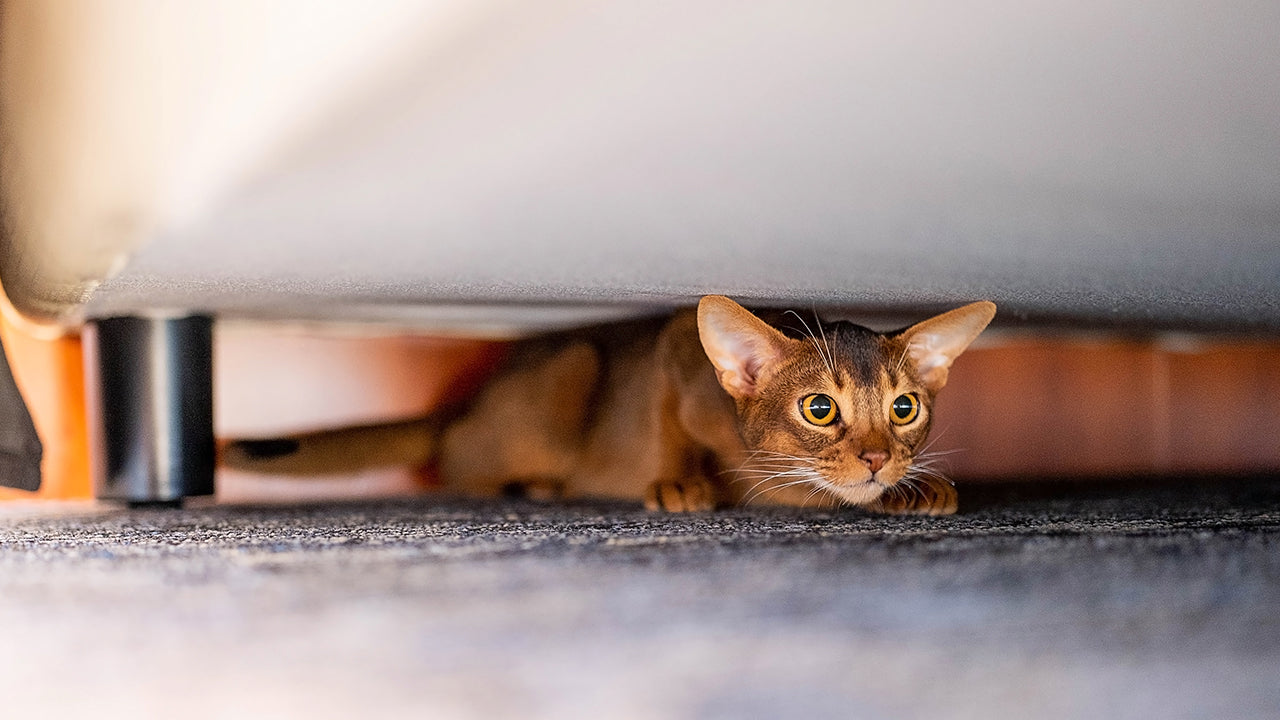
One minute, your cat is nearby. The next, they've disappeared under the sofa or behind a piece of furniture. Why do cats do this?
Hiding is a normal cat behavior. A quiet, sheltered place can help cats feel safe when something is new, noisy, or overwhelming. For a new kitten, there is no fixed number of days that hiding is considered normal.
Quick Answer: When Should You Worry?
Hiding after a move, visitors, noise, or play, while eating, drinking, litter-box use, and alertness stay normal. Your cat is gradually settling in.
A clear drop in eating or drinking, repeated vomiting or diarrhea, visible pain, marked lethargy, or worsening hiding.
Straining with little or no urine, difficulty breathing, collapse, or inability to stand.
Why Do Cats Hide? The 6 Most Common Reasons
A hiding cat isn't always a worried cat. Sometimes they need quiet, and sometimes they simply enjoy small spaces. These six reasons can help you tell the difference.
Stress From Changes at Home
Visitors, loud sounds, renovations, moving, or unfamiliar smells can send a cat into hiding. A new kitten might stay inside their carrier or under furniture while getting used to the home.
What helps: Start with a small, quiet safe area and let your cat set the pace, as the San Francisco SPCA advises. Adjustment may take days, weeks, or longer. Look for gradual progress, not a deadline.
Illness or Pain
Cats may become quieter and more withdrawn when they feel unwell. Hiding time alone cannot tell you if the cause is medical.
What to watch: Changes in eating, drinking, urination, breathing, movement, or energy. Kittens need earlier attention: Cats Protection recommends veterinary assessment for an older kitten after 12–24 hours without food or 12 hours without water, sooner with vomiting or diarrhea. Do not treat 24 hours as a default waiting period.
Social Tension in Multi-Cat Homes
Another cat might block a hallway, doorway, litter box, food station, bed, or favorite route. This is resource blocking or relationship tension, not necessarily a fixed rank between cats.
What helps: Spread food, water, litter boxes, beds, and hiding places across different areas. One litter box per cat plus one extra is a common starting point; bowls and beds don't need that exact formula. Every cat should have access without regularly passing another cat.
Overstimulation
After energetic play or lots of petting, a cat may retreat because they've had enough touch or excitement.
What helps: Give them a quiet break. Around 10–20 minutes can be a starting point, not a countdown. Let your cat's body language tell you when they're ready to interact again.
Fear of Specific Things
Thunderstorms, vacuums, unfamiliar visitors, new furniture, or sudden changes can frighten cats.
What helps: Offer a quiet, low-traffic hiding place with an easy way out. Let them relax without feeling trapped.
Curiosity and Rest
Many cats like exploring boxes, bags, closets, and small gaps. Enclosed spots can also be peaceful places to sleep.
What helps: If the spot is safe and your cat still eats, drinks, uses the litter box, and acts normally, there's usually no need to intervene. Block tight gaps, unstable furniture, and places where they could fall or get stuck.
Should You Pull a Hiding Cat Out or Go Looking for Them?
Usually, no. Forcing a cat out removes the control that made the hiding spot feel safe. The SF SPCA advises letting a new cat choose when to explore or seek attention.
| Approach | What It Means for Your Cat |
|---|---|
| Avoid | Pulling your cat out, crowding the entrance, or repeatedly peeking into the hiding place. |
| Why | Your cat may feel cornered, and their safe space can become another source of stress. |
| Do instead | Keep things calm. If appropriate, leave treats near the edge, then step away. Monitor food, water, and litter-box activity without repeatedly disturbing the hiding spot. |
When Does Hiding Become a Warning Sign?
Look beyond the number of hours your cat stays hidden. Changes in appetite, drinking, urination, breathing, movement, or energy are more useful clues. The severity of these signs matters too.
| Urgency | What You May See | What to Do |
|---|---|---|
| Emergency | Repeated straining with little or no urine, or crying and distress near the litter box. | Go to a veterinarian immediately. Urethral obstruction (a blockage that prevents urine from passing) can be life-threatening. |
| Emergency | Labored or open-mouth breathing, obvious breathing difficulty, collapse, or inability to stand. | Seek emergency veterinary care right away. |
| Prompt vet advice | A kitten is eating or drinking much less than usual; repeated vomiting or diarrhea; visible pain or injury; marked lethargy; or hiding that keeps getting worse. | Contact your veterinarian promptly. With kittens, don't automatically wait 24 hours when other concerning signs are present. |
Emergency warning: Straining with little or no urine, serious breathing difficulty, collapse, or inability to stand needs immediate veterinary attention. Don't wait for your cat to come out of hiding.
The Cornell Feline Health Center describes urethral obstruction as an absolute emergency and advises immediate veterinary care for cats having trouble breathing.
Kittens need earlier attention to food and water intake. Cats Protection says older kittens should be assessed by a vet as soon as possible after 12–24 hours without food or 12 hours without water, and sooner with vomiting or diarrhea. Kittens can become unwell faster than adult cats.
How Do You Create a Hideout Your Cat Will Actually Use?
A good hideout gives your cat privacy without trapping them. For new arrivals, the SF SPCA recommends a quiet safe haven with the essentials, followed by gradual exploration of the rest of the home.
- Offer more than one retreat. Place hiding spots in quiet, low-traffic areas so your cat can choose.
- Add a high-up option. Stable shelves or cat trees give cats distance from activity and a place to observe.
- Avoid dead ends. Where possible, provide an exit that doesn't lead straight past another pet or busy doorway.
- Keep scents gentle. Avoid strongly scented cleaners or air fresheners around the hideout.
- Use familiar bedding. A blanket or bed that already smells familiar can make the area feel less new.
The takeaway: Hiding can help cats handle fear, new surroundings, or overstimulation, but it can also come with illness or pain. Offer safe places to retreat, let your cat decide when to come out, and watch their eating, drinking, urination, breathing, movement, energy, and overall progress.
